As a long-time Outlook power user managing high-volume inboxes, I've refined these strategies to save hours weekly. From batching emails to automating organization, they demonstrate real-world efficiency gains while keeping your data secure and accessible.
Email remains the backbone of professional communication. Master Outlook to handle it effortlessly. Here's how to conquer your inbox.
Outlook's built-in tools make organization straightforward—no need for complex setups. I use a dual strategy of scheduled checks and automation for peak efficiency.
Start simple:
I limit checks to twice daily. This batching approach resolves everything in focused bursts, preventing constant distractions. Repeat later to stay current.
Rules automate sorting into client, topic, or personal folders—ensuring nothing slips, like boss emails.
These if-then automations run while Outlook is open, moving matches instantly. For instance, I route family emails (from varied addresses) to a 'Family' folder automatically.
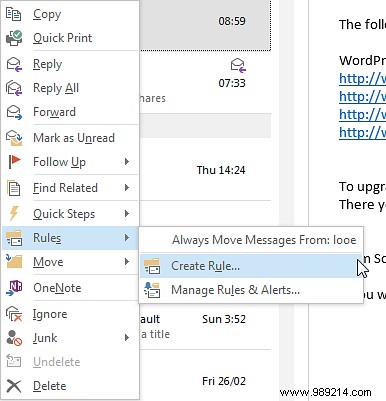
To set a rule: Right-click an email, select Rules > Always move to folder, then choose the destination.
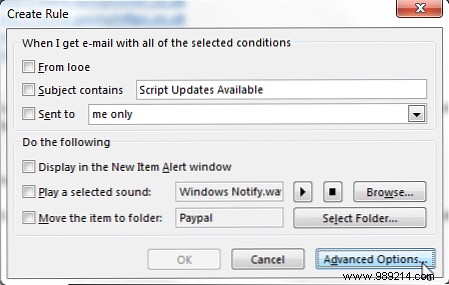
For complex needs, use Create Rule. Options include sender, subject, body keywords, or flags. Advanced settings handle specifics like sensitive content.
Enhance with subfolders under mains: To Do, Pending, Done.
Beyond folders, colors and flags provide visual prioritization. (Note: Related tips include 25+ keyboard shortcuts for even faster workflow.)
Assign colors sparingly for quick scanning—avoid rainbow overload. Limitation: Not supported on IMAP; use POP3. (IMAP vs. POP3 guide available.)
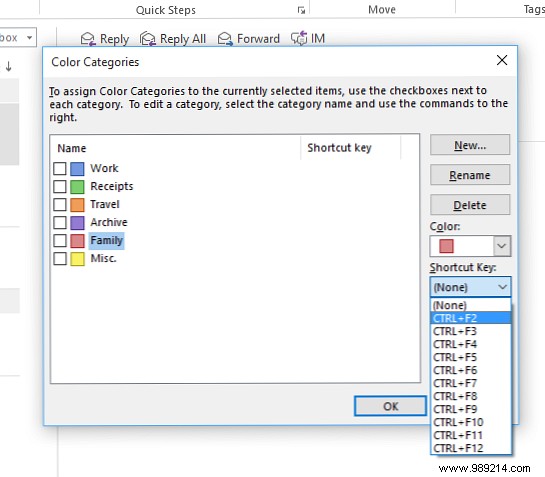
Setup: Home tab > Categorize > All Categories. Customize names, colors, shortcuts.
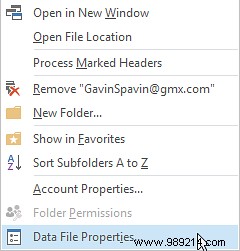
For existing POP3: Right-click account > Data File Properties > Upgrade to Color Categories.
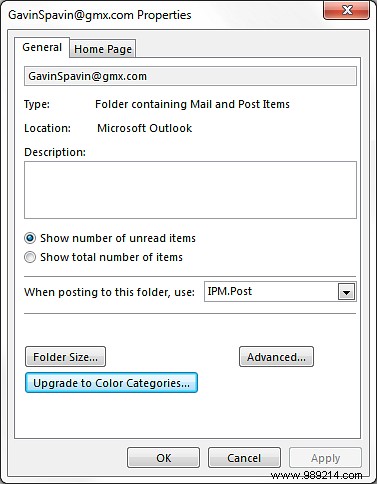
IMAP workaround: AutoFormat for sender/subject-based styling (detailed in future post).
Flags create a dynamic to-do list: Today, Tomorrow, This Week, Custom. Add reminders for deadlines.
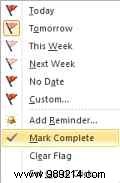
View: Home tab > Follow Up. Filter by priority.
These underused gems eliminate repetition in emails.
Reuse phrases effortlessly—like text expansion tools. (Learn more on text expansion benefits.)
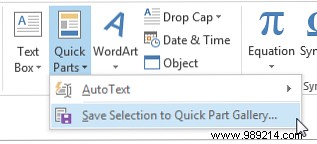
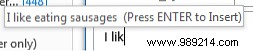
Create: Highlight text in compose window > Insert > Quick Parts > Save Selection to Quick Part Gallery.
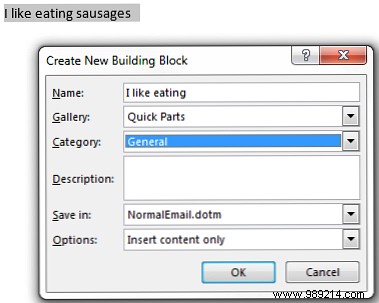
Insert via autocomplete.
Schedule sends perfectly—I used this during family illness to meet deadlines remotely.
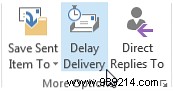
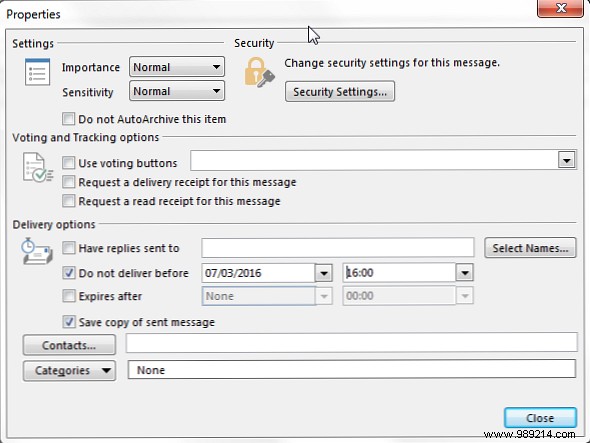
Compose > Options > Delay Delivery > Check Do not deliver before, set time > Close.
Exchange: Closes fine. IMAP/POP: Keep Outlook open until send time.
Save repetitive searches as virtual folders using templates or custom criteria.
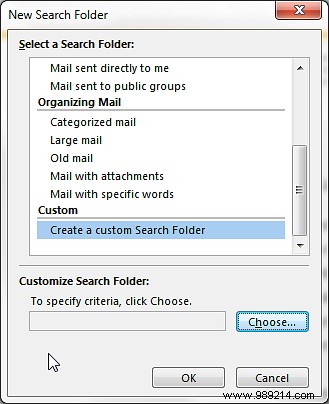
Folder tab > New Search Folder. Choose pre-sets or customize.
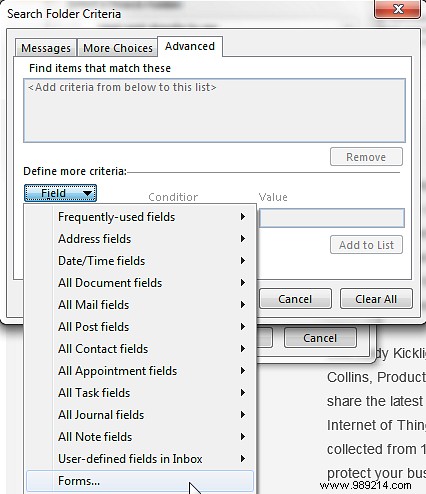
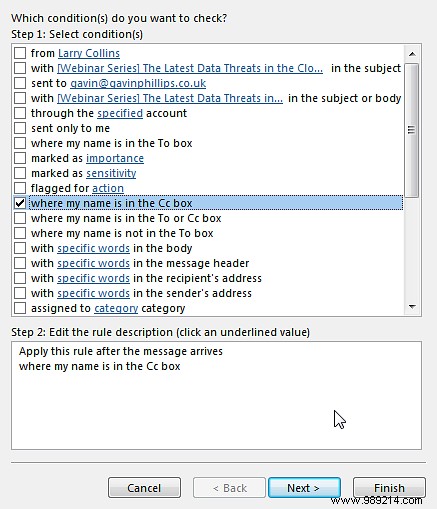
Filter irrelevant chains (e.g., CC-only). (Recall an email tip available.)
Home > Rules > Manage Rules & Alerts > New Rule. Check where my name is in the Cc box > move to folder.
Boost protection beyond default low. (Spam troubleshooting guide.)
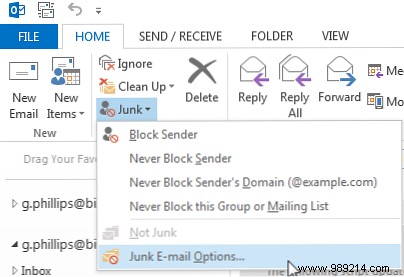
File > Options > Mail > Spam > Junk Email Options. Set High; check Junk regularly.
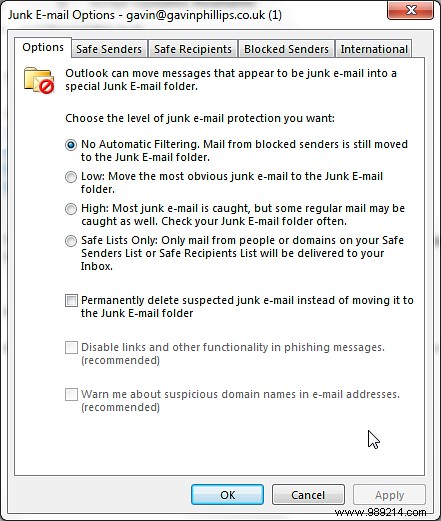
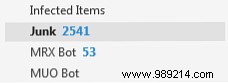
High risk: Permanent delete option loses false positives irrecoverably.
Outlook holds critical info—back it up now! (Archiving and contacts guides.)
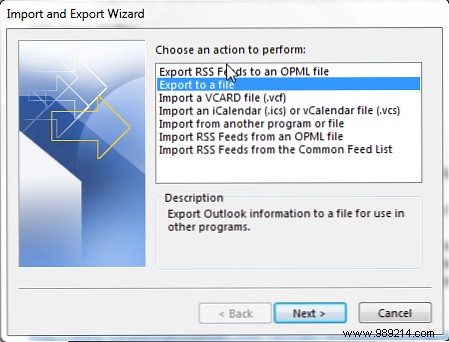
File > Open & Export > Import/Export > Export to a file > Outlook Data File (.pst). Select folders > save location.
Implement these consistently. Adapt to your needs for a stress-free inbox. (More tips: Ignore bad productivity myths; 10 quick Outlook hacks; Office 365 signatures.)
What's your top Outlook tip? Share below to help others automate efficiently!
