As a long-time Evernote user and productivity expert, I've seen firsthand how vital backups are. Worried about losing your notes, notebooks, and other data in Evernote? Don't rely solely on cloud sync—take control with regular backups. Sure, Evernote syncs across devices and the cloud, but that's not foolproof.
Unlike Dropbox, Evernote lacks built-in revision history. Accidental deletions from notes or trash are permanent. Shared notebooks can be edited unexpectedly by collaborators. Data can vanish in an instant. And while rare, what if Evernote faces a shutdown, server failure, or acquisition gone wrong? Backups provide peace of mind—I've relied on them through multiple close calls.
Regular backups mitigate all these risks. Here's how, based on years of hands-on experience.
Using the desktop app (available for Windows and Mac), export notes and entire notebooks effortlessly. Save to an external drive or cloud storage for safekeeping.
For a single open note, go to File > Export Notes... to create an Evernote (.enex) file or HTML. 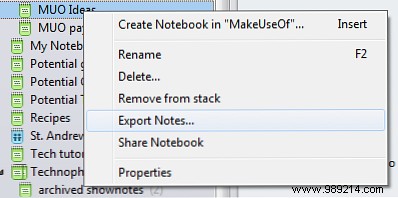
This works for individuals, but for bulk, export whole notebooks: Right-click the notebook in the sidebar.
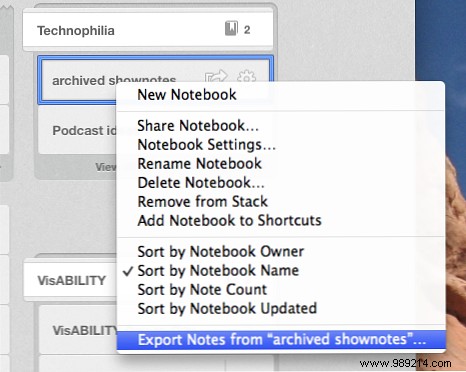
Mac users: This option isn't in the toolbar—use the notebooks list instead.
Choose Evernote format (.enex) for easy re-import (just double-click) or HTML for platform-independent access, though re-importing HTML elsewhere is trickier.
Exporting one by one is tedious with hundreds of notebooks. Instead, copy Evernote's local database folders directly—they mirror your synced content.
Windows (Vista, 7, 8):C:\Users\[username]\AppData\Local\Evernote\Evernote\Databases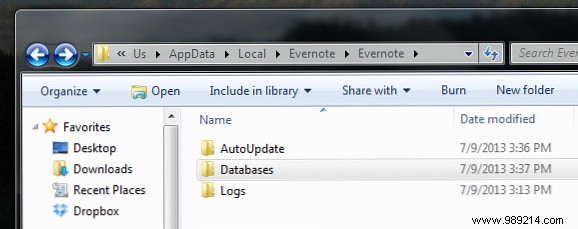
Mac OS X:/Users/[username]/Library/Application Support/Evernote
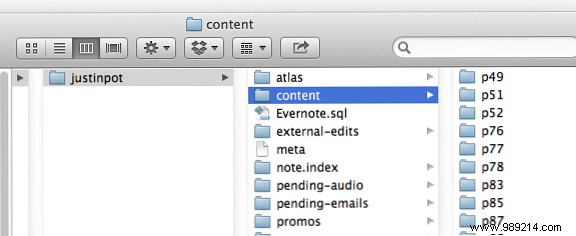
Back up these folders, and you're covered—even for total account wipes or drive failures. Just restore by copying back post-reinstall.
Mac App Store users: Local files are inaccessible. Download the standalone .dmg installer—your data imports on login (it may take time).
Windows 8 Microsoft Store users: Use the desktop version only for this method; install alongside if needed.
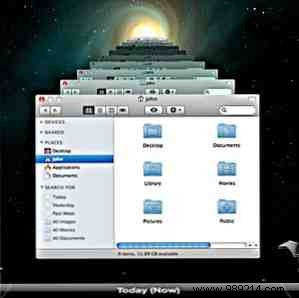
Leverage built-in tools like Windows Backup, File History (Windows 8+), or Time Machine (Mac) by including the Evernote folders above. For cloud sync, use Dropbox with symbolic links to mirror those directories seamlessly.
These methods have kept my Evernote data safe for years. Evernote outages are rare, but for critical info, why risk it? Automate where possible and check your setup regularly.
Got another backup tip? Tried our full Evernote guide? Share in the comments—I'd love to hear your experience.
